
Steak Rich
In one of Mexico's World Cup hosts, a strong and conservative middle class can indulge in certain pleasures of the flesh.
When I first arrived in Monterrey, Nuevo León, I was shocked to find how common it was for the average regio to start their day with beef stews and grilled steak tacos. Not only because it’s a considerably heavy choice for the early morning, but because meat is famously expensive. Especially now.
As a prosperous and relatively peaceful state (especially compared to the recent violence unleashed in Guadalajara, and the constant chaos of the capital), Nuevo León claims a solid middle-class that stands apart from the rest of México in its spending habits, its meat-eating being an obvious giveaway. In 2021, the average Mexican consumed 15 kilograms of beef a year, whereas locals ingested closer to 30 or 35kg. The number seems accurate and even low by anecdotal standards - it is not uncommon to find neoleoneses who eat meat in some form or another for every single meal, nearly every single day.
Socialising is beef-centered. On long weekends the shelves of stores offering charcoal and grilling supplies look demolished, since the standard way to initiate or deepen a friendship is by suggesting a “carne asada”. One of the most successful recent local ventures (the state is rife with the entrepreneurial spirit) began with a grilling competition, the Sociedad Mexicana de Parrilleros (Mexican Society of Grillers, SMP) now boasts multiple outposts in México where it teaches others how to properly fire up a grill. Their approach to cooking is social, and its generous philosophy of hospitality has proved more appealing to Mexicans than the isolation and self-obsession pushed by other meat-obsessed influencers in the US or Europe. It is normal for little boys (and girls) to be gifted toy grills or small set ups for them to mimic parrilleros from a young age, with the hopes they will soon be able to part-take in the real thing. Even in this more conservative culture, the golden standard of socialization has become increasingly less gendered.
Most people in Monterrey have or make space to host their gatherings in houses or apartments, and though economics has something to do with it, I quickly learned, so does design. Apartment buildings here include/allow multiple grills on their roofs or social areas in order for its residents to host their sacred carne asadas outdoors and with a view, like God intended. It often happens that multiple grills are on at once, even in more humble apartment buildings or streets, it’s not uncommon to see small makeshift grills or ironically tiny versions of the Big Green Egg hanging off of the tightest of balconies or set up in driveways, sidewalks or directly on the street.
Every so often, some regio will go viral for engineering a particularly clever grill fitted to be waterproof, bare-bones, solar powered or some other rarity.
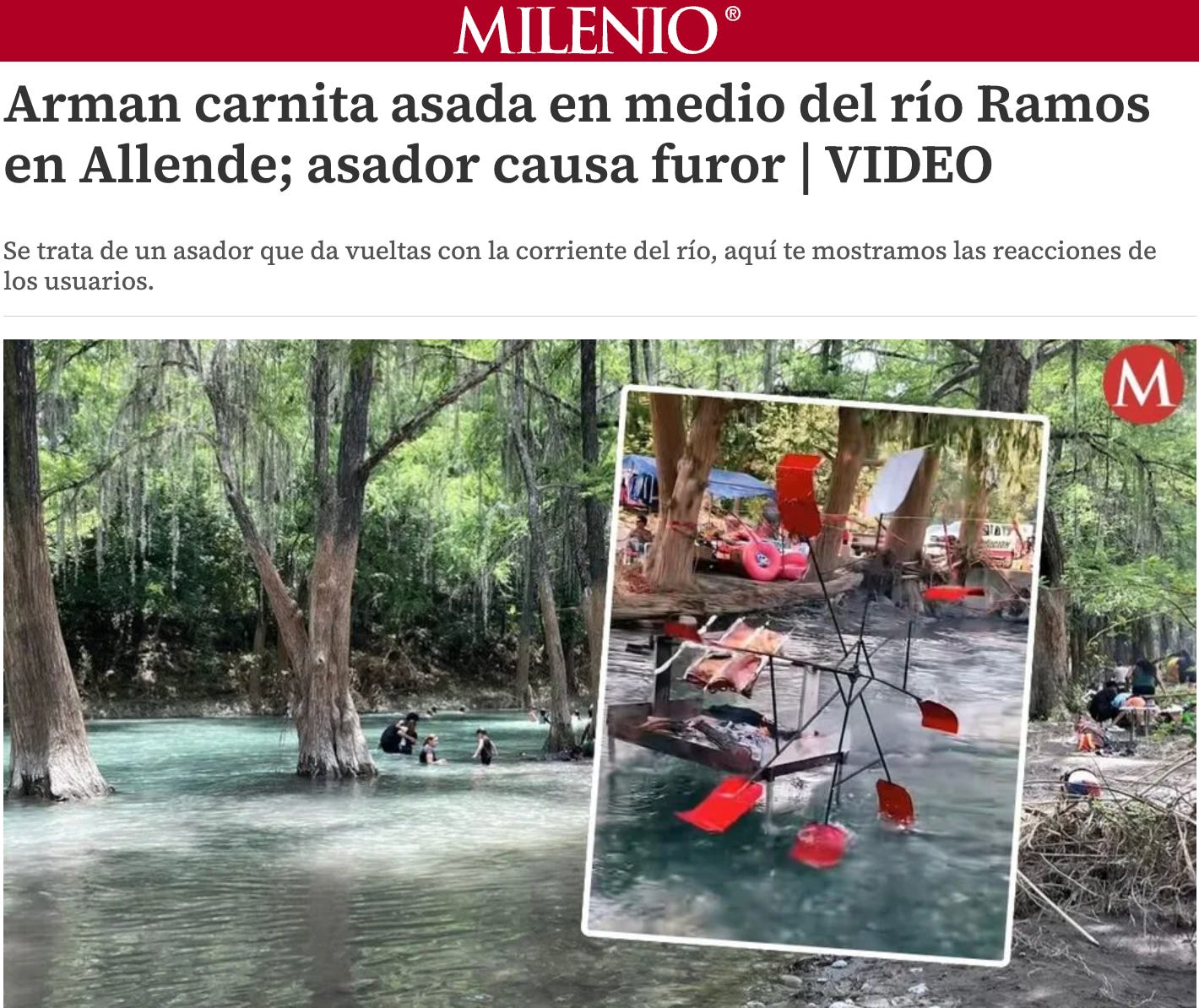
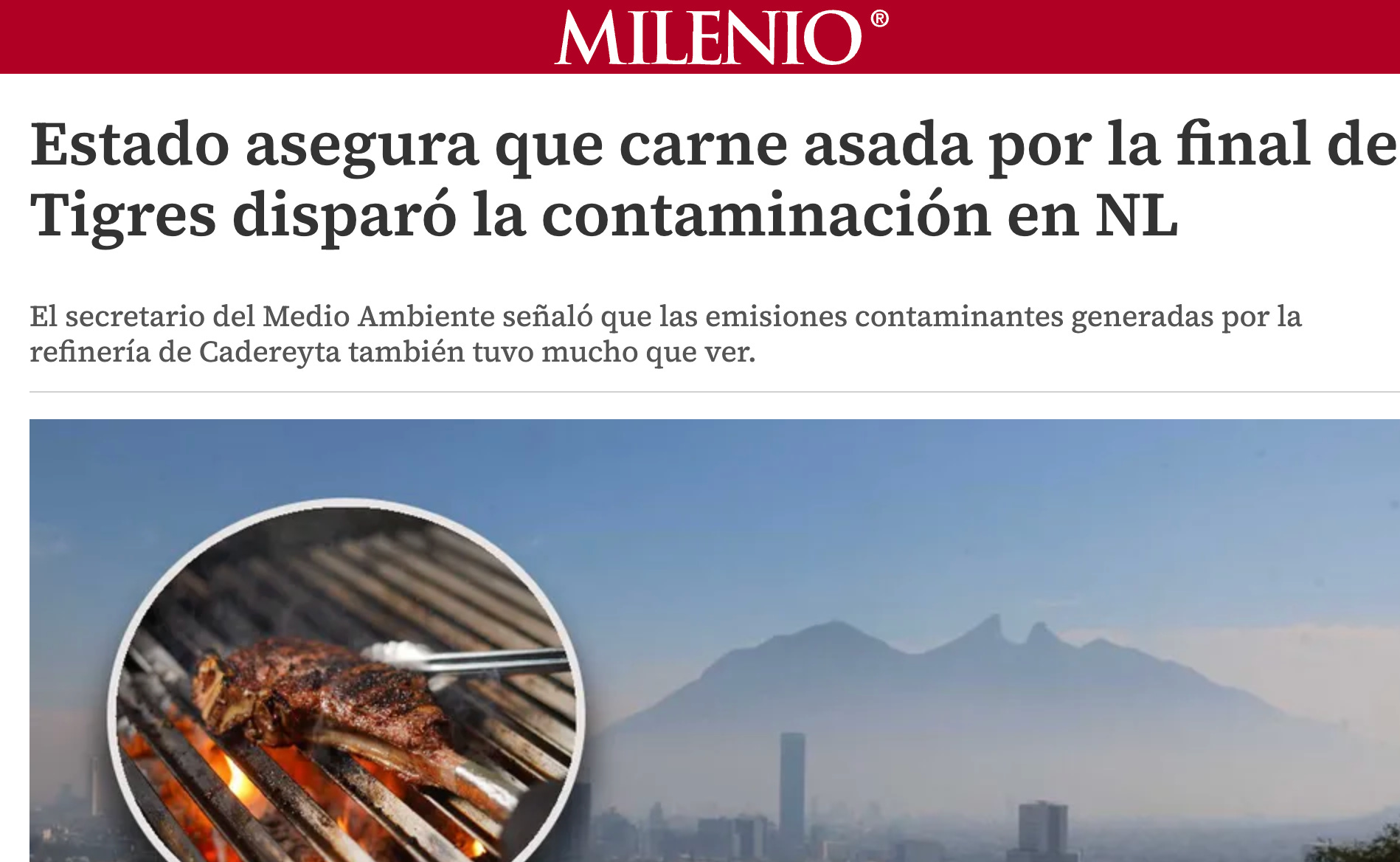
The fascination is such, that the current government attempted to partly blame the city’s atrocious air pollution problem on the population’s cultural proclivities. It did not go over well, not only because it was a ludicrous accusation but because there is nothing that will ever get between regios and their Friday, Saturday or Sunday nights by the grill.
Especially if there’s a game on. Actually, a common quip points out that locals are so obsessed with grilling meat that they will take any excuse to do so, be it celebratory, neutral or mournful:

Though the carne asada is a homey and near holy tradition, or partly because of it, steakhouses remain anchored in tradition and elegance. They are exquisite about the presentation of their dishes, freezing stunningly marbled meat in custom-made window fridges nuzzled between thick marble slats. Under expert lighting, they look like precious stones or works of contemporary art. Something Damien Hirst might do, perhaps.
In these places, the cuts are still brought to the table and ceremoniously sliced by a sharply dressed server who will be waiting with baited breath for the approval of the entire party. If one single person objects, the dish is returned to the kitchen until the perfect level of done is achieved. None of this is special or spectacular to locals, it continues to be the expected standard of a well-heeled place, however long-forgotten it may be in many of the more recipe driven “concept” restaurants that have emerged in the nation’s capital.
But this city is not built like that.
Some liken Nuevo León to Texas, a rich state with conservative leanings and an engine of economic growth for the rest of the nation. Mexico City’s businessmen will tell you “things run differently” in this northern state, not only because it is the country’s industrial jewel but because it seems somehow stuck in a time before attitude shifts towards consumption limited people’s appetite for beef, fuel-guzzling cars and the willingness to admit to both.
The habit has led some local restaurants to engineer dishes that still showcase the protein, but in a way deviates from the standard fare: enter, beef aguachile or rib-eye chicharrón. Recently, I was confronted by a bone broth on-tap station at my closest supermarket, a centrally-located HEB which boasts parades of Alo-clad mothers and Birkin-slinging grandmas who all share facial features. Unrelated, except by surgeons.
Surgeons, famously used to train with butchers, back when both were seen as similar trades. And though neighbourhood butchers have become a thing of the past for many urbanites around the world, here, multiple specialty stores line the city as modern embodiments of that age-old tradition. These smaller versions of supermarkets are devoted to meat-eaters and offer expert advice, training their staff to answer queries similar to those you might have regarding wine at a specialty shop. At your disposal, multiple cuts of meat of a wide array of animals, all types of rubs, all kinds of wood and all manner of tools medically displayed in stores with white walls and endless fridges. The sinewy fibers of beef steaks are blown up in giant photographs that seem almost abstract, and red dominates the type or background of most signage.
All this to say, Monterrey is famous for many things, chief amongst them its people’s work ethic. Notwithstanding the obvious positive associations this has, some scholars have questioned whether it has also contributed to a certain resignation when it comes to demanding better standards of living. Nuevo León state suffers from some of the worst air quality in the world (the dark side of its industrial bounty), and though salaries are higher than elsewhere in the country, it comes at the cost of lengthy, difficult commutes and a lack of green areas in the wider urban sprawl.
Despite all this, regios trudge on under a punishing sun, only to get home and head for the coals. Few can deny the fact that firing up the grill when it’s 110 degrees outside and cooking a meal for a group of people, is hard work. However, most regios would never think to call it that, because the effort put into their traditions and their social signifiers pays back in dividends - this is how strong networking bonds are formed, how couples meet, how families come together. This is a part of what makes them, them.
They’ve worked so hard, they can afford to enjoy this.